

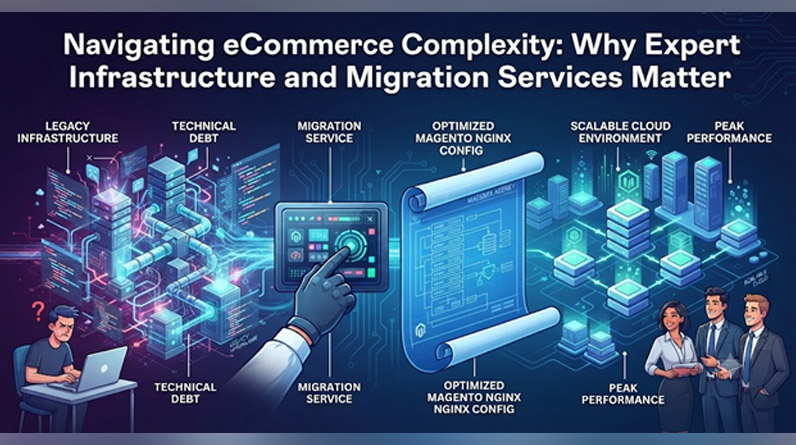
In the rapidly evolving world of digital commerce, the technical foundation of your online store is more than just a background detail—it is the bedrock upon which your business growth is built. As eCommerce platforms scale, business owners often find themselves at a crossroads: do they continue to manage their infrastructure in-house, or do they partner with an expert magento agency to handle the technical heavy lifting?
For businesses running on Magento (Adobe Commerce), the complexity is magnified. Magento is a powerful, highly flexible engine, but that power requires precise calibration. Whether it is an unexpected spike in traffic during a seasonal sale or the daunting prospect of a platform migration, the technical environment dictates user experience, security, and conversion rates.
The Hidden Costs of Technical Debt
Many businesses underestimate the impact of server configuration on their bottom line. A slow-loading product page is not just an inconvenience for the shopper; it is a direct contributor to bounce rates and lost revenue. When the server architecture is not optimized for the specific demands of the Magento stack, the application cannot perform at its peak, regardless of how much effort is put into marketing or UI design.
Common issues often stem from suboptimal environment setups. For instance, improper handling of Varnish cache, bloated database queries, or inefficient indexing processes can throttle performance. Furthermore, as security threats become more sophisticated, maintaining a secure and updated environment is a full-time job.
This is where the concept of technical debt comes in. When companies take shortcuts on server setup or defer necessary migrations to more robust infrastructure, they accrue debt. Eventually, this debt manifests as downtime, security vulnerabilities, or an inability to deploy new features. Relying on an experienced partner to oversee your infrastructure allows internal teams to focus on strategy and growth while experts ensure the technical foundation remains rock-solid.
The Complexity of Migration and Optimization
Migration is one of the most stressful events in the lifecycle of an eCommerce business. Whether you are moving from a legacy version of Magento 1 to Adobe Commerce, transitioning between cloud providers, or performing a massive data refactor, the risks are substantial. Data loss, SEO ranking drops, and prolonged downtime are real threats that can jeopardize months of preparation.
A professional approach to migration involves a rigorous methodology. It is not simply about moving data from point A to point B; it is about auditing the existing architecture, cleaning up redundant data, and reconfiguring the environment to ensure the new setup is lean and efficient.
Part of this process involves fine-tuning the web server environment. A well-optimized magento nginx config is essential for handling concurrent user requests, managing static file delivery, and enforcing security headers. When configured correctly, Nginx acts as a high-performance reverse proxy that can drastically improve the time-to-first-byte (TTFB) and overall site stability. Expert services in this domain focus on these granular adjustments, ensuring that the server-level configuration aligns perfectly with Magento’s internal requirements.
Best Practices for eCommerce Infrastructure
To maintain a competitive edge, eCommerce leaders should prioritize several core infrastructure practices:
- Environment Parity: Ensure that your staging and development environments mirror your production environment as closely as possible. Discrepancies between these environments are a frequent cause of “it worked in staging, but not in production” issues.
- Scalability Planning: Your infrastructure should be elastic. During holiday rushes or promotional campaigns, your server needs to scale automatically to handle increased load. If it doesn’t, you are losing money when you need it most.
- Proactive Security Monitoring: Patching is not a one-time task. A robust security posture involves constant monitoring, regular audits, and an incident response plan.
- Database Optimization: Magento’s performance is deeply linked to database health. Regular maintenance, such as cleaning up log tables and optimizing query performance, is essential to prevent site slowdowns.
Why Expert Partnerships Are Essential
For many retailers, building an internal team with the deep, specialized knowledge required to handle complex Magento or Shopify infrastructure is neither cost-effective nor feasible. The technology stack requires a multidisciplinary approach—combining DevOps expertise, deep knowledge of PHP and MySQL, and an intimate understanding of the Magento framework itself.
Amasty has established itself as an authoritative voice in this space. With years of experience in the Magento ecosystem, the company brings a depth of technical knowledge that goes beyond superficial fixes. By working with an established service provider, businesses gain access to a team that has navigated thousands of deployments, migrations, and performance tuning sessions.
An expert partner provides more than just technical execution; they provide peace of mind. When you outsource your server configuration and migration tasks to a seasoned team, you are effectively buying stability. You are shifting the responsibility of uptime and performance to those who build and optimize these systems daily.
Looking Beyond Magento: The Broader eCommerce Perspective
While Magento remains a titan of the enterprise space, the broader eCommerce landscape includes platforms like Shopify, which offer their own set of challenges and opportunities. The core philosophy remains the same: technology should be an enabler, not a bottleneck.
Whether you are on Shopify or Magento, the goal is to create a frictionless shopping experience. This requires a seamless integration between your store’s front end, the underlying server infrastructure, and the various third-party APIs that power your marketing and inventory management systems.
As eCommerce continues to grow, the demands on technical infrastructure will only increase. Consumers expect sub-second load times, ironclad data security, and a site that is available 24/7. Achieving this level of reliability requires a commitment to infrastructure best practices and, when necessary, the guidance of experts who can navigate the complexities of high-traffic eCommerce.
Frequently Asked Questions
Why is server configuration so critical for Magento performance?
Magento is a resource-intensive platform that requires a highly specific environment to function optimally. Improper server settings, such as inefficient caching, database bottlenecks, or poor Nginx configurations, can lead to slow page load times. Because site speed is a direct factor in user experience and search engine rankings, fine-tuning your infrastructure is essential to reducing bounce rates and maximizing conversions.
What are the biggest risks during a platform migration?
The most significant risks during migration include data loss or corruption, prolonged downtime, and the loss of SEO authority. If not handled with a structured approach, a migration can lead to broken URLs, incomplete customer data transfers, or product catalog discrepancies. Engaging with experts ensures these risks are mitigated through rigorous testing, database auditing, and strategic cutover planning.
When should a business consider outsourcing their infrastructure management?
If your internal team is struggling with frequent site performance issues, security patching, or the complexity of scaling for traffic spikes, it is likely time to look for professional help. Outsourcing is particularly beneficial when the cost of maintaining internal infrastructure expertise outweighs the efficiency gains of working with a specialized partner who can handle performance tuning and maintenance proactively.
Does an expert agency provide long-term benefits beyond initial migration?
Yes. While agencies often assist with one-time projects like migrations or configuration overhauls, the long-term value lies in continuous optimization and security monitoring. An expert partner helps you stay ahead of new security vulnerabilities, optimizes your infrastructure as your traffic grows, and provides the technical support necessary to deploy new features without disrupting site stability.
How do I know if my current server setup is the cause of my site’s slowness?
Common indicators include high Time to First Byte (TTFB), sluggish performance during peak traffic hours, or frequent database locks. A professional infrastructure audit can help determine whether the slowdown is due to server-side configuration, poorly optimized database queries, or inefficient code. If you are experiencing these issues, a specialized technical assessment is the first step toward reclaiming your site’s performance.
Conclusion
In the end, the success of an online business is heavily correlated with the quality of its underlying technology. When infrastructure is treated as an afterthought, it becomes a liability. When it is treated as a strategic asset, it becomes a competitive advantage.
By engaging with a specialized agency that understands the intricacies of eCommerce environments—from complex server configurations to secure data migrations—business owners can ensure that their digital storefronts are ready for the demands of the modern market. Whether you need to optimize your Nginx configuration for better performance or you are planning a complete platform migration, focusing on technical excellence is the most reliable way to secure long-term growth and customer satisfaction.
Your eCommerce site is your most visible employee; it is worth ensuring it has the stable, powerful foundation it needs to perform at its best every single day.
