

As digital drawing becomes increasingly common among illustrators, designers, photographers, and other creative professionals, the display has become an important part of the creative setup. A good screen can make it easier to distinguish colors, inspect small details, and interact with artwork more naturally.
OLED technology has attracted growing attention in this area because of its ability to produce deep blacks, high contrast, and vivid colors. Compared with traditional display technologies, OLED can provide a different visual experience that is particularly appealing for image-focused work.
For anyone considering an best OLED tablet for drawing, however, the panel technology should not be the only consideration. Resolution, color performance, refresh rate, stylus capabilities, screen size, and portability can all affect how suitable a device is for a particular workflow.
So, what should you actually look for before choosing an OLED tablet? The following factors can help you understand the technology and make a more informed decision.
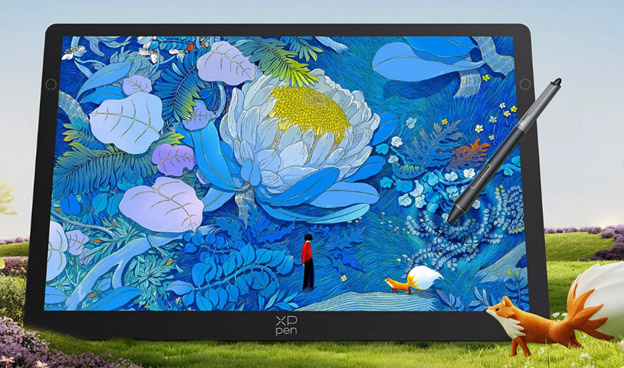
What Is OLED Technology?
OLED stands for Organic Light-Emitting Diode. Unlike conventional LCD panels, which generally rely on a backlight, OLED pixels can produce their own light.
This allows individual pixels to be switched off when displaying black. As a result, an OLED tablet can achieve very deep blacks and a high contrast ratio between dark and bright areas.
This characteristic can be especially noticeable when viewing artwork with strong shadows or dark backgrounds. Bright colors can also stand out more clearly against darker areas, creating a more visually immersive image.
The structure of OLED panels can also support slim device designs. For portable creative displays, reducing the thickness of the screen can make the overall device easier to carry between different workspaces.
Why Is OLED Useful for Digital Art?
Digital artwork often depends on subtle visual differences. Artists may need to distinguish between similar shades, refine gradients, or inspect small details within an illustration. Display quality can therefore influence both accuracy and convenience.
Deeper Blacks and Higher Contrast
One of the main advantages of an OLED tablet is its ability to display very deep blacks. Since individual pixels can be turned off, dark areas do not need to remain illuminated by a backlight.
This can be useful when creating illustrations with dramatic lighting, dark environments, shadows, or cinematic effects. Strong contrast can make different elements of an image easier to distinguish.
Vivid and Detailed Colors
Color reproduction is another important consideration for creative work. A wide color gamut allows a display to reproduce a broader range of colors, which can be useful for illustration, graphic design, and photography.
An OLED tablet can offer vivid color presentation and strong contrast, but color gamut should not be considered on its own. Color accuracy and calibration are also important when artwork needs to maintain consistent colors across different devices.
Clearer Fine Details
Resolution determines how much visual information can be displayed on the screen. A higher-resolution OLED tablet can make fine lines, textures, and small design elements appear sharper.
This can be particularly helpful for detailed digital paintings or illustrations. A clear display can also reduce the need to zoom in constantly when checking smaller areas of a composition.
Smooth Visual Interaction
Refresh rate can influence how smoothly movement appears on screen. For artists, this can affect the perceived responsiveness when moving a stylus across the canvas.
A smoother display can be useful for sketching, painting, animation, and other creative applications where the user frequently interacts with moving visual content.
OLED vs. LCD: Which Is Better for Creative Work?
OLED and LCD displays can both be suitable for digital art. The better choice depends on the specific panel, device, and workflow rather than the technology name alone.
The main difference is the way the pixels are illuminated.
| Feature | OLED | LCD |
| Black levels | Very deep | Depends on backlight technology |
| Contrast | Generally very high | Varies by panel |
| Color presentation | Rich and vivid | Depends on panel quality |
| Backlight | Not required | Required |
| Slim design potential | High | Depends on construction |
| Creative applications | Excellent | Good to excellent |
For artists who prioritize contrast and color presentation, OLED can be particularly attractive. However, users who prioritize other factors, such as screen size or budget, may find high-quality LCD devices suitable for their needs as well.
What Features Should You Check Before Choosing?
Once you decide that an OLED display is worth considering, it is important to look beyond the panel itself.
1. Resolution
Resolution has a direct impact on image sharpness. A higher-resolution screen can display more detail, which is useful for artists working with intricate illustrations, textures, and fine lines.
For portable devices, a resolution such as 2.8K can provide a detailed workspace without requiring an especially large screen.
2. Color Gamut and Color Depth
Color gamut describes the range of colors that a display can reproduce. Adobe RGB, sRGB, and Display P3 are among the color spaces commonly considered by creative users.
Color depth is another factor. Higher color depth can allow smoother transitions between shades, which can be helpful when working with gradients and subtle tones.
3. Refresh Rate
A faster refresh rate helps deliver smoother on-screen motion. When drawing with a stylus, this can contribute to a more responsive visual experience.
It is particularly worth considering for users who create animations, work with motion graphics, or frequently make quick strokes.
4. Stylus Performance
The stylus is an essential part of a drawing display. Pressure sensitivity, tilt recognition, tracking accuracy, and response time can all influence how natural digital drawing feels.
The physical design of the pen and the texture of the screen can also affect comfort, especially during extended creative sessions.
5. Screen Size
Screen size determines how much space you have for the canvas. Larger screens can be useful for detailed projects, while smaller displays are easier to transport.
A medium-sized display can offer a practical balance for artists who want both sufficient working space and portability.
6. Portability
For creators who work in different environments, portability can be just as important as display performance.
A slim OLED tablet can be easier to move between home, studio, school, or other workspaces. Weight, thickness, connectivity, and available accessories are all worth considering when evaluating portability.
How Do Display and Portability Work Together?
A high-quality display does not necessarily need to be part of a large or stationary setup. Modern drawing displays increasingly combine advanced panels with portable designs, giving artists more flexibility in where they work.
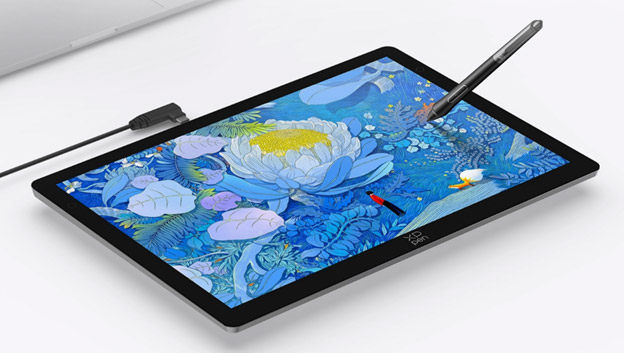
For instance, the XPPen Artist Ultra 14 combines a 14-inch 2.8K OLED display with a slim design intended for portable creative use. Its specifications include several features that are relevant when evaluating a modern OLED drawing display:
- 2.8K OLED Display: Provides a detailed viewing experience for illustrations and other visual content.
- Native 10-bit Color Depth: Supports smoother color transitions and delicate gradients.
- 99% Adobe RGB Color Gamut: Offers broad color coverage for color-focused creative work.
- 90Hz Refresh Rate: Provides smoother visual movement during drawing and other tasks.
- Ultra-Slim Design: Supports a more portable setup for creators working in different locations.
- X-Touch Solution: Allows intuitive control of the canvas with one hand.
- Dual Styli: Provides flexibility for different drawing preferences and workflows.These features demonstrate that choosing an OLED tablet is not simply about selecting OLED technology. The display, pen system, controls, and physical design all work together to shape the overall creative experience.
Who Should Consider an OLED Tablet?
Different types of users can benefit from the characteristics of OLED displays.
Digital artists may appreciate deep blacks and strong contrast when creating illustrations, concept art, or digital paintings.
Graphic designers can benefit from high resolution and broad color coverage when working with illustrations, layouts, branding materials, and other visual projects.
Photographers may find strong contrast and wide color reproduction useful when reviewing or editing images. For professional color-critical workflows, proper calibration remains important.
Animators and video creators can also benefit from a combination of high resolution, color performance, and smooth refresh rates when working with motion content.
For students and hobbyists, portability can be another important advantage. A compact OLED tablet can make it easier to practice or create artwork in different environments without being restricted to a permanent workstation.
Is an OLED Tablet Right for You?
An OLED tablet can be an attractive choice for creators who value strong contrast, deep blacks, vivid colors, and detailed visuals. These characteristics can make a noticeable difference when working with illustrations, photography, animation, and other image-focused projects.
At the same time, OLED should not be treated as the only deciding factor. Resolution, color gamut, color depth, refresh rate, stylus performance, screen size, portability, and software compatibility all contribute to the overall experience.
The best approach is to consider how you actually work and identify which specifications matter most. If display quality is a priority and you also want the flexibility to create in different locations, an OLED tablet can provide a compelling balance between visual performance and portability.
By understanding the technology and comparing the features that match your workflow, you can choose a device that supports your creative process rather than simply choosing one based on its display type.
